
Spinal surgery decisions turn far more on progressive loss of function than on how much pain you are in. Severe findings on a scan, by themselves, do not make an operation necessary, and a long wait already served is not a reason to go ahead with one. The question worth answering is not whether surgery works. It is whether this is the right person, for this problem, at this time.
I am Dr Alex Freeman (chiropractor) and I practise in Victoria Park, Perth. This is the hardest conversation I have with patients, and I want to start it somewhere unusual, because I do not want you reading the rest of this wondering whether a chiropractor is just going to tell you to avoid surgery.
Two operations in my own family
My grandfather had a cervical spine operation. Years later, so did my father. Same side. Same level. The same muscle gone, effectively complete loss of function in the biceps.
Neither of them got much back.
My father recovered maybe ten per cent, and he kept it. That is the whole return. I could produce some of that function with adjusting beforehand, but I could never hold it. After the operation he could get it and hold it, and for that I think he should be genuinely grateful.
Ten per cent is not much. Plenty of people would not go under a general anaesthetic for ten per cent, and I would not think less of them. But by the time either of them was operated on, the nerve injury was already too great. The surgery was never offered as a way to feel better. It was offered as the last remaining chance of protecting what was left and of creating conditions where something might come back.
I still think both of them were right to do it.
That is not what people expect a chiropractor to say, and it is the foundation of everything below.
The part we did not know for thirty years
Here is the detail that still bothers me.
We did not know my grandfather had ever had that operation. He had a stroke, a real one, and for decades the family simply assumed the weakness in his arm came from it. It did not. A genuine diagnosis had quietly absorbed a symptom it never caused, and because there was already an explanation on the table, nobody went looking for another one.
We only found out when my father went for his own surgical opinion and the surgeon mentioned, in the appointment, that he had performed the same operation on my grandfather.
Two things come out of that.
The first is that the genetic contribution to disc degeneration is well established in twin research, and my family is a fairly striking illustration of it. Same side, same level, same result, two generations. Though I should be honest that two people is a story, not evidence.
The second matters more, and it is the thread running through everything else I write about. A plausible label attaching itself to the wrong symptom is one of the most common failures in musculoskeletal care. I see it with headaches filed under migraine that start in the neck. I see it with dizziness filed under the inner ear when the neck is contributing. And I saw it in my own family for thirty years.
So ask your parents what they have actually had done. Family history does not travel on its own.
A good decision and a good outcome are not the same thing
This is the distinction that almost never gets made, and without it no honest conversation about surgery is possible.
You can make exactly the right call and get a disappointing result. My father did. You can also make a poor call and get away with it entirely, and never know.
So judge a decision by the information available at the time it was made, not by how it turned out. A person talked into an operation on the strength of a report rather than an examination may well have had a fine result. That does not make it a good decision. It makes it a lucky one.
None of that is an attack on surgeons. Everyone has a place in health care. The question is only ever whether you are with the right person, for the right problem, at the right time.
What genuinely moves the needle towards an operation
These are the things that actually change the calculation.
Progressive neurological loss. Strength that is measurably declining, sensation that is receding, reflexes that are disappearing. Not pain. Loss of function, getting worse over time.
Cauda equina compression. Numbness through the saddle region, changes to bladder or bowel control, symptoms in both legs. This is a surgical emergency, it is a different category entirely, and it needs urgent medical assessment the same day.
Myelopathy. Compression of the spinal cord rather than a single nerve root. Hand clumsiness, changes to walking and balance, symptoms in both arms. This needs a specialist opinion promptly.
A genuine trial of conservative care that has failed. Meaning care actually delivered properly over an adequate period with objective measures, not "I tried a few sessions of something".
Instability, fracture, infection or tumour. Different problems with different rules.
What does not, on its own
The severity of your imaging. This is the big one. I regularly see people with moderate to severe lateral recess narrowing who have long stretches with no pain at all, and who examine completely normally. Hamstrings strong. Big toe extension strong. Inversion and eversion intact. Reflexes present. Sensation normal. Ugly pictures, working body.
If the function is there, the narrowing on its own does not make the case. Something has to be failing.
Pain level alone. Severe pain is a reason to take someone seriously and to treat them properly. It is not, by itself, evidence of the sort of compression that surgery addresses.
One bad week. Which brings me to the thing that makes all of this genuinely difficult.
The variability problem
Spinal symptoms fluctuate. Day to day, week to week, month to month, and sometimes dramatically. Someone can be barely functional in March and fine in August with nothing much having changed on imaging.
That has a hard consequence. A single snapshot is close to useless for making an irreversible decision. If you are assessed on your worst day, the picture is bleaker than the truth. On your best day, it is rosier.
The only way around it is repeated measurement of the same things over time. Not how you feel today. Specific strength figures, specific ranges of motion, specific functional tests, taken more than once, so the trend is visible rather than the moment.
A trend is information. A snapshot is a guess.
What a real trial of conservative care looks like
The phrase gets used loosely, so here is what I mean by it.
An accurate diagnosis from an examination, not from a report. Care delivered at an appropriate frequency over an adequate period, usually several weeks at minimum. Something you are doing between visits, because passive care alone rarely holds. Objective measures taken at the start and repeated formally, which in our practice means a progress examination at the twelfth visit comparing the same figures we took on day one. And a clear decision point, so that if it is not working, that is identified early rather than drifted past.
If that has been done properly and the function is still going backwards, that is a meaningful failure and it should count. If it has not been done at all, then conservative care has not failed. It has not been tried.
If you have improved while you have been waiting
This situation comes up more than you would think, and it deserves saying clearly.
Someone presents with significant nerve involvement, often already referred, often already booked. They respond well to conservative care. By the time the surgical date comes round, the deficit that justified the operation has substantially resolved.
What I am not going to tell you is to cancel your surgery. That is not my call and it should not be.
What I will say is this. The surgeon who booked that operation has not met the current version of you. The decision was made months ago, on a patient with different strength, different reflexes and different function. If those findings have materially changed, that is new clinical information, and the decision was never made with it.
So ask to be re-examined before the date. Not to cancel. To be reassessed. A surgeon who examines you and still believes you need the operation will keep you on their list, and you will go ahead knowing it is right rather than hoping it is.
And on the queue. I understand completely why someone who has waited six months does not want to go to the back of the line. But nobody should have an operation in order to keep their place in a queue, and saying that out loud seems worth doing. If you still need it after reassessment, you have lost nothing.
Questions worth asking your surgeon
This is the practical part, and it is more useful than any opinion I could offer, because it puts the decision back where it belongs.
What specific function am I losing, and how quickly?
Which findings on my physical examination, rather than on my scan, are driving this recommendation?
What is the realistic goal of this operation? Less pain, restored function, or preventing further loss?
What happens if I wait three months and we measure again?
What does success look like, and what percentage of people get it?
If my strength and function have improved since we last met, would that change your recommendation?
Every one of those is a fair question and any good surgeon will welcome them. If the answers are solid, you proceed with confidence. That is a better outcome than either of us talking you out of anything.
How I document, and why it matters here
If you tell a surgeon you feel a lot better, nothing changes. No surgeon acts on that, and they are right not to.
If you hand a surgeon a letter showing that your big toe extension strength went from a documented deficit to full over twelve weeks, with dynamometry figures and dates, that is clinical evidence and it can genuinely affect a decision.
So I record specific myotomal strength and specific ranges of motion at your first examination, I repeat the same measures at your progress examination, and when I write to your GP or specialist I lead with those numbers and the change in them. Our practitioners work to a written standard for medical correspondence for exactly this reason.
It cuts both ways, and that is the point. The same documentation that makes a case for continuing conservative care is what makes it obvious, and early, when someone is not responding and needs to escalate. I would far rather find that out at twelve visits than at twelve months.
Common questions
Should I have surgery for a disc bulge?
A disc bulge on its own is rarely an indication for surgery, and it is a common finding in people with no symptoms at all. Surgery is generally considered where there is progressive neurological loss, a significant deficit, or failure of a genuine trial of conservative care. This is a decision for you and a surgeon, based on your examination rather than your report alone.
Can I get a second opinion before spinal surgery?
Yes, and it is a normal and reasonable thing to do for any irreversible procedure. Asking to be re-examined before a scheduled operation, particularly if your symptoms or function have changed since the decision was made, is not undermining your surgeon. It gives them current information.
My scan looks bad but I feel fine. Do I need an operation?
Imaging severity alone does not usually justify surgery where function is intact. People with significant narrowing can have long symptom-free periods and completely normal examinations. What matters is whether something is measurably failing, and whether it is getting worse.
How long should I try conservative care before considering surgery?
There is no single answer, and it depends on the presentation and whether there is neurological involvement. What matters more than the duration is that care was genuinely delivered, that objective measures were taken and repeated, and that there was a clear point at which progress was formally reviewed. Red flag presentations are the exception and need urgent assessment rather than a trial of anything.
Will a chiropractor tell me not to have surgery?
I would not, other than in circumstances so clear-cut that it had to be said, and that is rare. My role is to assess accurately, treat what responds to conservative care, document function over time, communicate clearly with your medical team, and refer promptly when referral is what is needed.
If you are weighing this up
Bring everything. Your imaging, your reports, your correspondence. Whether or not conservative care is appropriate for you, an accurate examination with measurable findings is useful in either direction, and it is something you can take to whoever you see next.
We are at 249B Albany Highway, Victoria Park, and we see patients from East Victoria Park, Kensington, South Perth, Como, Lathlain, Carlisle, Burswood, Rivervale and Belmont.
Book online or call 0493 290 505. You may also want to read what your MRI report actually means, neck pain with arm symptoms, chronic low back pain, and sciatica.
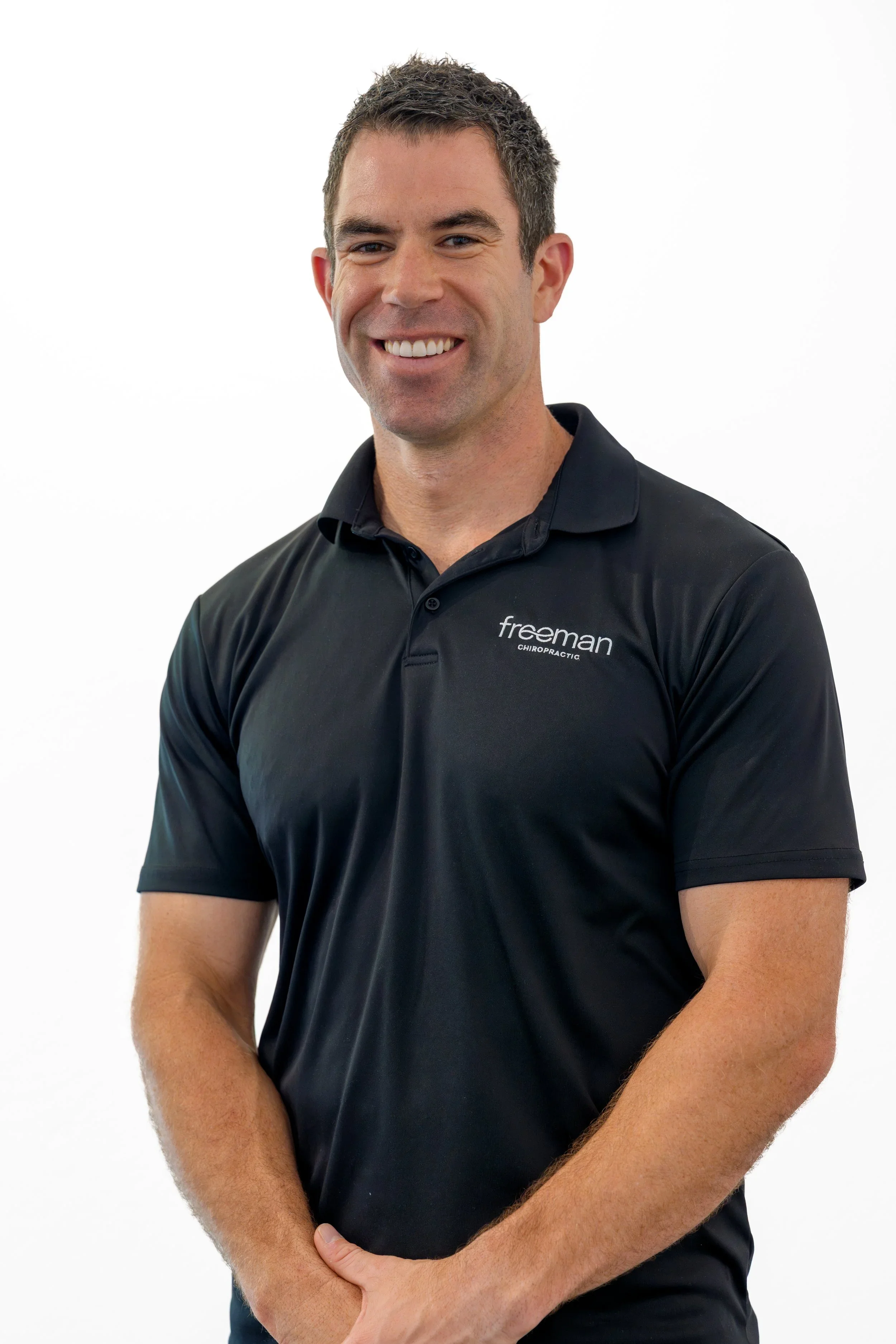
Freeman Chiropractic · Victoria Park
Weighing up spinal surgery?
Book a consultation and examination with Dr Alex Freeman at 249B Albany Highway, Victoria Park. Bring your imaging and reports. No GP referral needed.
This article is general information and is not a substitute for individual assessment, and it is not advice for or against any particular procedure. Decisions about surgery are for you and your treating medical team. Dr Alex Freeman is a registered chiropractor practising in Victoria Park, Western Australia.