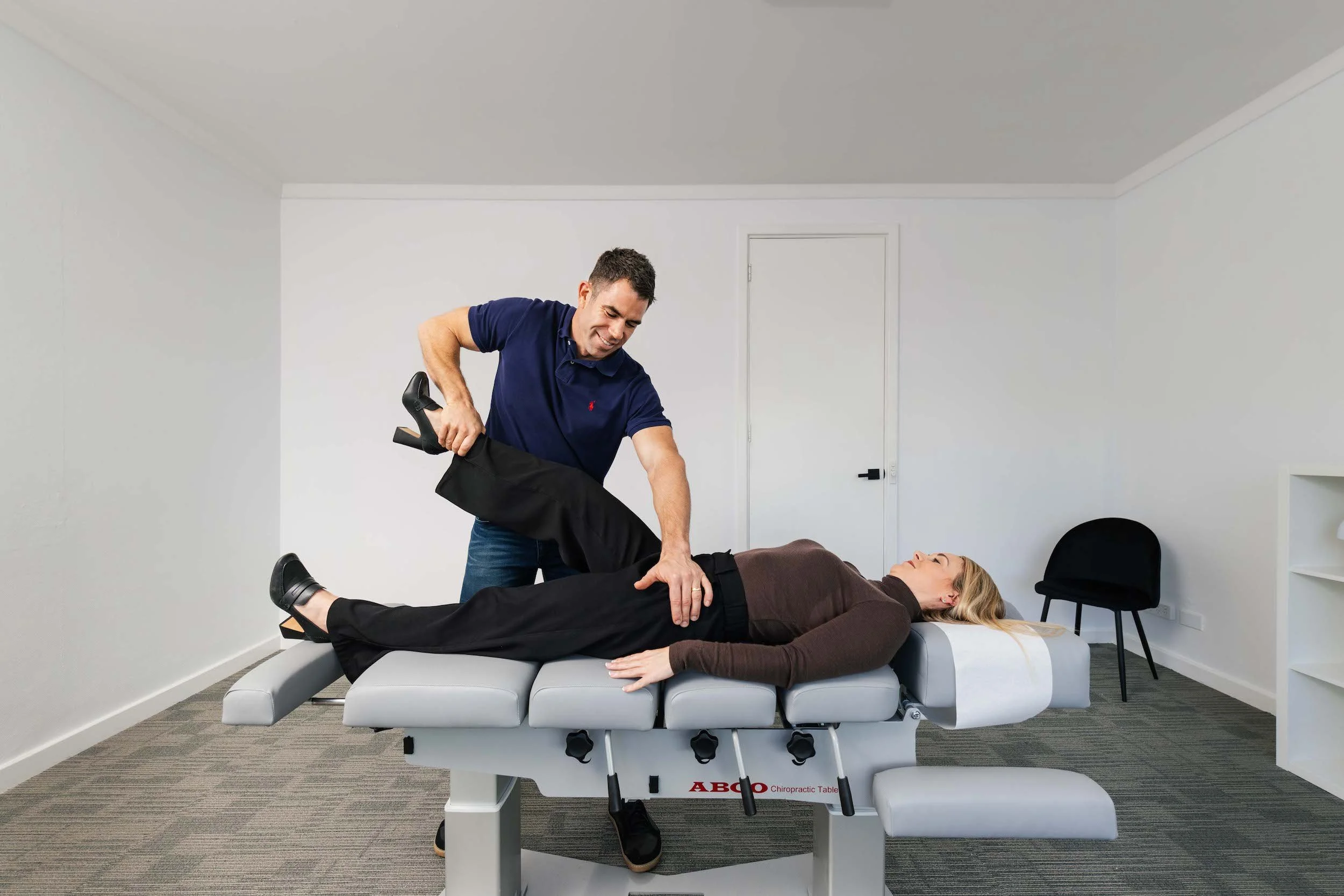

Sciatica Chiropractic Care in Victoria Park, Perth
Sciatica is a common condition that can cause pain, tingling, numbness, or discomfort that travels from the lower back into the buttock, leg, or foot. It is one of the more common nerve-related complaints we see at our Victoria Park clinic.
Many people assume sciatica is simply a "back problem," but symptoms are often influenced by a combination of factors involving the lower back, pelvis, hips, muscles, and nervous system.
At Freeman Chiropractic, we don't just focus on where the symptoms are felt. We assess how the lower back, pelvis, hips, and surrounding structures are functioning together, as these areas can often contribute to ongoing irritation and movement restrictions.
Is sciatica affecting your sitting, sleep or work?
Book an assessment with Dr Alex or Dr Joel – no GP referral needed, and private health rebates are available on most extras policies. Prefer to talk? Call 0493 290 505.
Why do I have sciatica?
Sciatica occurs when the sciatic nerve becomes irritated or sensitive somewhere along its pathway. While symptoms can develop suddenly, they often build gradually over time due to repetitive stress, reduced mobility, or underlying spinal changes.
Common contributing factors seen in practice include:
Prolonged sitting and sedentary work
Disc-related irritation in the lower back
Reduced mobility through the hips and pelvis
Previous lower back injuries
Repetitive lifting or bending
Muscle tension through the glutes and hip region
Poor movement patterns during work or exercise
Age-related changes within the spine
Many people are surprised to learn that the location of symptoms is not always where the primary issue originates. Pain travelling into the leg may be related to irritation occurring higher up in the lower back or pelvis.
What is sciatica?
Sciatica refers to symptoms associated with irritation or sensitivity of the sciatic nerve, the largest nerve in the body.
Rather than being a diagnosis itself, sciatica describes a pattern of symptoms that can include pain, tingling, numbness, burning sensations, or weakness travelling from the lower back into the buttock, leg, or foot. Our guide explains the causes and red flags of sciatica in more detail.
Symptoms may vary from mild and intermittent to more persistent discomfort that affects sitting, walking, exercise, and daily activities. Some leg pain comes from the lower back discs; read more about disc-related leg pain.
What are the common symptoms of sciatica?
Sciatica can present differently from person to person depending on the structures involved and the degree of nerve irritation.
Lower Back and Leg Pain
Pain that begins in the lower back or buttock and travels down the leg.
Tingling or Pins and Needles
Altered sensation that may extend into the thigh, calf, or foot.
Numbness
Reduced sensation in certain areas of the leg or foot.
Burning or Sharp Pain
Some people describe sciatica as burning, shooting, or electric-like pain.
Weakness
In some cases, nerve irritation may be associated with weakness in the leg or foot.
Signs it's time to get sciatica checked
You don't need to wait until symptoms become severe before seeking an assessment.
You may consider having your symptoms assessed if:
Pain is travelling into the buttock or leg
Sitting aggravates your symptoms
Tingling or numbness keeps returning
Walking or exercise has become uncomfortable
Symptoms are affecting work or sleep
Back pain and leg pain are occurring together
Symptoms are gradually worsening over time
Early assessment is often about understanding what may be contributing to nerve irritation and identifying movement patterns that could be placing ongoing stress on the lower back and surrounding structures.
How we can help with sciatica
Your first visit is a thorough assessment – a detailed health history, a physical, neurological and orthopaedic examination, and muscle activity scans (sEMG). Before any treatment starts, we explain what's likely contributing to your symptoms, and if anything needs medical review, we'll tell you and refer you to your GP.
Depending on your assessment, your care may include chiropractic adjustments, soft tissue therapy and dry needling, along with advice on sitting, movement and sleep positions so you know what you can do between visits.
No GP referral needed · Private health rebates available
Sciatica Chiropractors
Dr Alex Freeman
Firm, hands-on adjustments, dry needling and soft tissue work. Experienced with sciatica and long-standing back pain.
Dr Joel Maylor
Exercise science and sports rehab background. Practical, movement-focused care for active people.


5 stars from 130+ Google reviews
“Alex is incredibly knowledgeable, genuine and patient focused. His clinic is a wonderful space and the staff are friendly & professional.”
— Natalia N.“Highly recommend practitioner Joel, his knowledge and experience is shown through his approach to treatment. I appreciate his insight on looking at the body holistically”
— Jess B“Really amazing clinic. Very caring and thorough, and attentive to patient needs.”
— Chrissy L
YOUR CARE IN 3 STEPS
-
01
Understand what's going on
We start with a thorough assessment to understand your concerns and determine the right approach for you.
✓ Health history & physical assessment
✓ Muscle activity scans (sEMG)
✓ X-ray referral, if clinically indicated
-
02
Hands-on care tailored to you
Based on your assessment your treatment plan may include:
✓ Chiropractic adjustments
✓ Dry needling
✓ Soft tissue therapy
-
03
Keep progressing
Once you're feeling better, we space out your visits and give you what you need to stay on track, with care tailored to your goals and lifestyle.
Your Sciatica Questions, Answered
-
Sciatica describes a pattern of symptoms rather than a single diagnosis. Pain, tingling, or numbness travelling along the sciatic nerve can arise from different sources, including irritation near a lumbar disc, narrowing around a nerve root, or tension in the hip and gluteal region. Identifying the likely source is the first goal of a sciatica assessment at our Victoria Park clinic.
-
Go to an emergency department immediately if leg pain is accompanied by numbness around the groin or inner thighs, new difficulty controlling your bladder or bowel, or leg weakness that is getting worse. These signs can indicate cauda equina syndrome, a rare condition that requires urgent medical treatment. Chiropractic care is not appropriate until a medical practitioner has assessed these symptoms.
-
Your chiropractor assesses how the lower back, pelvis, and hips move, then tests reflexes, sensation, and muscle strength to understand how the nerve is affected. Tests that gently tension the sciatic nerve help distinguish nerve-related pain from pain referred by muscles or joints. These findings guide a care plan tailored to the likely source of your symptoms.
-
Sitting, particularly in a slumped position, increases load on the lumbar discs and can add tension to an irritated nerve root, which is why symptoms often build during long drives or desk work. Breaking up sitting every 20 to 30 minutes, adjusting chair height, and taking short walking breaks can help. Your chiropractor can tailor these strategies to your routine.
-
Recovery time varies with the cause of nerve irritation, how long symptoms have been present, and your general health. Many episodes improve gradually over several weeks, while sciatica linked to more significant disc injury can take longer. Your chiropractor will outline a care plan after your assessment, monitor changes in your leg symptoms at each visit, and adjust care as you improve.