
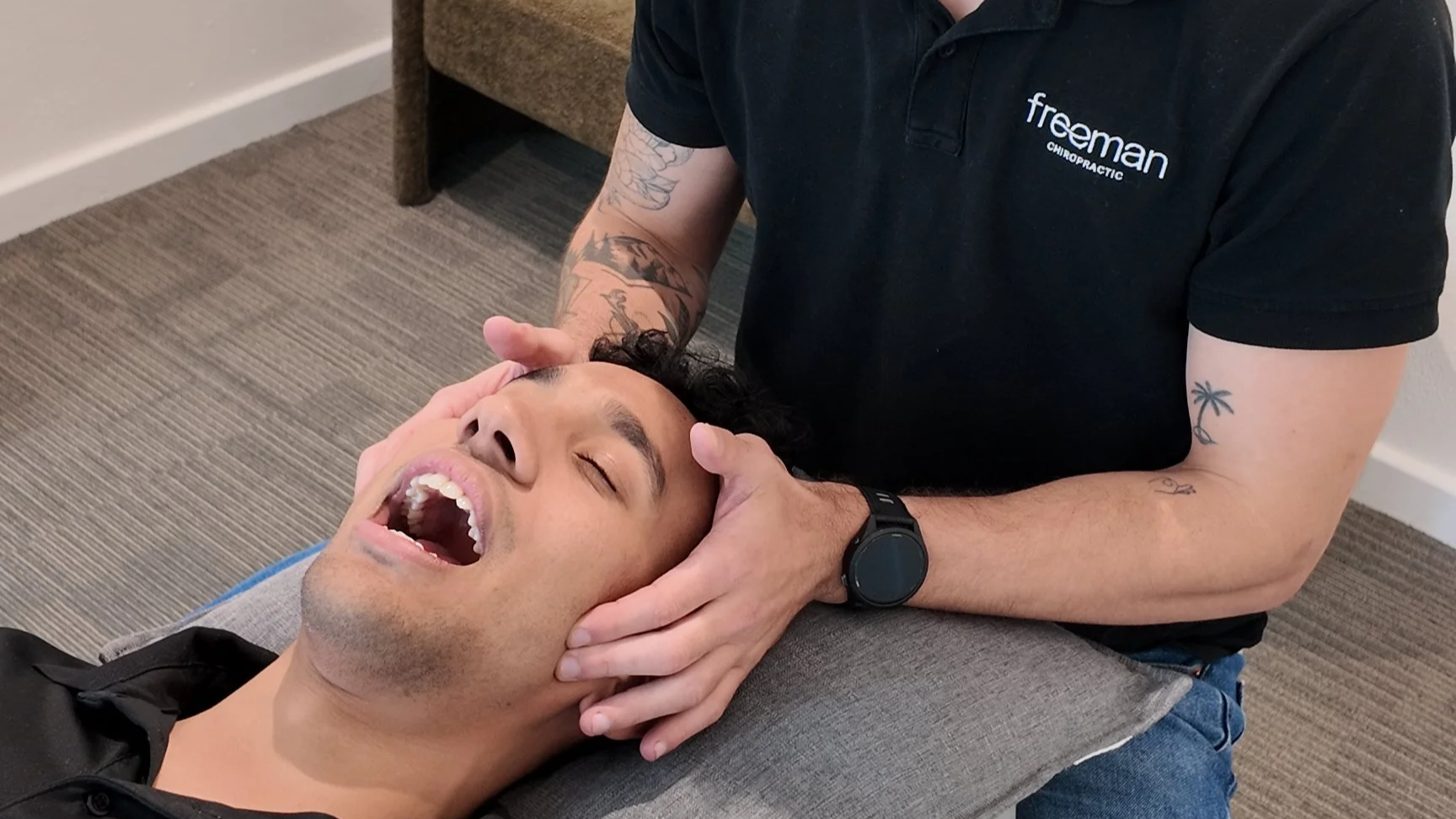
TMJ and Jaw Treatment Perth | Freeman Chiropractic Victoria Park
Jaw pain and TMJ (temporomandibular joint) dysfunction are common reasons people seek care at our Victoria Park clinic. While many people associate jaw pain with dental problems, symptoms are often influenced by a combination of muscular tension, joint irritation, posture, stress, and movement patterns throughout the head, neck, and upper body.
In many cases, jaw discomfort develops gradually rather than from a single injury. Everyday habits such as teeth grinding, clenching, prolonged desk work, stress, and poor posture can all place additional strain on the jaw joint and surrounding muscles.
At Freeman Chiropractic, we don't only focus on the jaw itself. We assess how the jaw, neck, upper back, and surrounding muscles are functioning together, as these areas often influence one another and may contribute to ongoing symptoms.
Why do I have jaw pain?
Jaw pain can develop for many different reasons. While some people notice symptoms after dental work, injury, or trauma, many cases arise gradually due to repetitive stress and muscle tension.
Common contributing patterns we see in practice include:
Teeth grinding (bruxism) or jaw clenching
Increased stress and muscle tension
Poor posture, particularly with prolonged desk work
Reduced movement in the neck and upper back
Previous head, neck, or jaw injuries
Repetitive chewing habits
Sleep-related jaw tension
Joint irritation within the TMJ
A common finding is that jaw pain is not always isolated to the jaw itself. Restrictions through the neck, upper back, and surrounding muscles can influence how the jaw moves and functions over time.
What is TMJ dysfunction?
The temporomandibular joint (TMJ) connects the jaw to the skull and helps with speaking, chewing, yawning, and everyday jaw movement.
TMJ dysfunction refers to irritation, restriction, or altered function of the jaw joint and surrounding muscles. Symptoms can vary significantly between individuals and may affect one or both sides of the jaw.
What are the common types of TMJ and jaw pain?
TMJ and jaw-related symptoms can present in several ways depending on the structures involved.
Jaw Joint Pain
Discomfort directly around the jaw joint, particularly when chewing, talking, or opening the mouth.
Jaw Clicking or Popping
Clicking, popping, or grinding sensations during jaw movement which may be associated with altered joint mechanics.
Jaw Muscle Tension
Tightness or tenderness in the jaw muscles, often related to clenching, grinding, or stress.
Limited Jaw Movement
Difficulty opening the mouth fully or a feeling that the jaw is restricted or tight.
Headaches Associated with Jaw Tension
Some people experience headaches or facial discomfort alongside TMJ symptoms, particularly around the temples and cheeks.
Facial Pain
Pain or discomfort through the cheeks, jawline, or surrounding facial muscles.
When should I see a chiropractor for jaw pain?
You don't need to wait until symptoms become severe before seeking an assessment.
You may consider having your jaw assessed if:
Jaw pain keeps returning
Clicking or popping is becoming more noticeable
You frequently wake up with jaw tension
Chewing feels uncomfortable
Headaches are occurring alongside jaw symptoms
Neck and jaw discomfort seem to occur together
Symptoms are gradually worsening over time
Early assessment is often less about treating pain and more about understanding what may be contributing to ongoing strain.
Jaw pain is rarely influenced by the jaw alone. It is often connected to how the neck, upper back, posture, and surrounding muscles are functioning together.
At our Victoria Park clinic, we focus on identifying these contributing factors and assessing movement patterns throughout the jaw, neck, and upper body to support improved function and everyday comfort.
→ See available times
TMJ & Jaw Pain Chiropractors
Dr Alex Freeman
Hands on chiropractic care tailored to jaw tension, TMJ discomfort, and related neck stiffness.
Dr Joel Maylor
Movement-focused care supporting jaw function, posture and surrounding muscle tension.